Spec Battle: Ipad Pro M5 vs Beelink Ser9 Pro Mini Pc — Is It Worth Upgrading?
Introduction
When buyers consider a hardware upgrade in 2026, two device classes increasingly compete for attention: premium tablets with desktop-class silicon and compact x86 mini PCs that aim to deliver full desktop performance in a tiny chassis. The iPad Pro M5 and the Beelink Ser9 Pro Mini PC represent these divergent approaches. One packages Apple’s latest mobile-first system-on-chip into a highly optimized tablet with a polished OS and display; the other squeezes workstation-level x86 silicon, ports, and upgradeability into a small desktop footprint.
This article examines what each device delivers for typical buyers: creatives, power users, students, and professionals who need either portability or a compact desktop. It breaks down real-world performance, software ecosystem, expansion and I/O, power and battery behavior, and cost-to-value considerations. The goal is to answer the central question: for someone leaning toward an upgrade, which device makes sense and when is upgrading truly worth it?
Detailed Product Analysis
How to read this comparison
Rather than focus on single benchmark numbers, the analysis emphasizes real-world workflows and buyer priorities: software compatibility, multitasking, content creation, gaming, peripheral support, and longevity. Where specifications vary by configuration, the discussion uses representative characteristics and notes trade-offs.
iPad Pro M5 — What it brings to the table
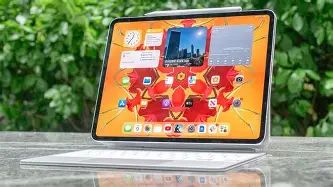
The iPad Pro M5 continues Apple’s strategy of marrying high-efficiency mobile architecture with desktop-class performance in a tablet. Its strengths are a tightly integrated hardware-software stack, very high-quality display technology, long battery life under typical mixed usage, and an app ecosystem optimized for touch, Apple Pencil, and split-screen workflows.
Key practical points for buyers:
- Performance-per-watt: The M5 is designed to deliver excellent single-threaded performance and efficient multi-core throughput for creative apps like image and video editors, music production tools, and many native iPadOS apps.
- Display and input: The iPad retains an edge with its color-accurate high-brightness panel and Apple Pencil support, which matters for illustrators, retouchers, and annotation-heavy workflows.
- Portability: Lightweight, instant-on behavior, and cellular options suit on-the-go professionals and students.
- Limitations: iPadOS remains more sandboxed than desktop OSes; certain pro workflows—native desktop-class applications, full virtualization, and legacy x86 software—are constrained or unavailable.
Beelink Ser9 Pro Mini PC — What it brings to the table
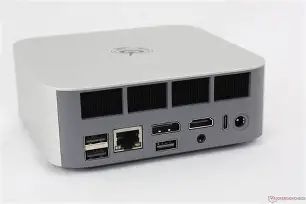
The Beelink Ser9 Pro is a compact mini PC family that generally targets users who want desktop-level flexibility within a small footprint. These systems typically pair mid- to high-end x86 laptop-class or mobile workstation CPUs with ample I/O and sometimes modular memory/storage. A mini PC like the Ser9 Pro appeals to users who need full Windows or Linux compatibility and the ability to drive multiple external displays and peripherals.
Key practical points for buyers:
- Compatibility & productivity: Full desktop OS support means access to legacy enterprise apps, engineering and development toolchains, robust virtualization, and the full desktop versions of Adobe, Office suites, and developer IDEs.
- Sustained multi-threaded performance: The Ser9 Pro’s x86 silicon and active cooling allow higher sustained multi-core throughput for tasks like software compilation, 3D rendering, and multi-track audio mixing.
- Ports & expandability: Multiple USB-A/USB-C, Ethernet, and sometimes M.2 or SO-DIMM slots make the mini PC a flexible hub for desks or media setups.
- Limitations: It lacks the native touchscreen, pen input, and battery-based portability of a tablet. Noise and thermal characteristics under load can be higher than a fanless tablet.
Pros & Cons
iPad Pro M5 — Pros
- Exceptional display quality and color accuracy for content creation
- Outstanding battery life for mobile productivity and media consumption
- Seamless mobile ecosystem with highly optimized native apps
- Instant-on, silent operation, and excellent thermal efficiency
- Apple Pencil and touch-first workflows that are industry-leading for drawing and annotation
iPad Pro M5 — Cons
- Limited by iPadOS for some professional desktop apps and developer tools
- Peripheral connectivity and multi-monitor setups require adapters or hubs
- Less upgradeable; internal storage and RAM are fixed at purchase
- Expensive when configured with top-tier storage and accessories
Beelink Ser9 Pro Mini PC — Pros
- Full desktop OS compatibility (Windows/Linux) for broad software support
- Stronger sustained multi-core performance for heavy compute tasks
- Rich I/O and upgrade paths (RAM, NVMe) in many configurations
- Excellent for multi-display setups and desk-centric workflows
- Typically more configurable on purchase, allowing trade-offs between CPU, RAM, and storage
Beelink Ser9 Pro Mini PC — Cons
- Requires external monitor, keyboard, and mouse — not immediately portable
- Higher power draw and active cooling can produce fan noise under load
- Smaller chassis can limit thermal headroom compared with full towers
- Software experience can vary with Windows bloatware or driver inconsistencies depending on configuration
Side-by-side Spec Snapshot
The following table provides a practical, representative view of each product class. Exact configurations vary by SKU, and users should check the precise model they plan to buy.
Find top-rated Laptops & Computers products at great prices.
Browse Now →| Category | iPad Pro M5 (representative) | Beelink Ser9 Pro Mini PC (representative) |
|---|---|---|
| CPU | Apple M5 system-on-chip — ARM-based, high-performance and efficiency cores optimized for burst and low-power sustained loads | x86-based mobile/workstation-class CPU — optimized for sustained multi-core throughput (varies by SKU) |
| GPU | Integrated Apple GPU with strong performance-per-watt for native apps and Metal-accelerated workflows | Integrated or discrete-class GPU options depending on configuration; generally stronger for native x86 OpenGL/DirectX titles |
| RAM | Fixed at purchase — unified memory architecture (fast, efficient, non-upgradeable) | Often user-upgradeable SO-DIMM slots or soldered options depending on the unit |
| Storage | Fixed internal SSD options; not user-replaceable in practice | M.2 NVMe expansion or replaceable SSDs in many models |
| OS | iPadOS — touch-first, optimized native apps, sandboxed environment | Windows or Linux — full desktop applications, drivers, and developer toolchains |
| Display | Built-in high-refresh, color-accurate display with Apple Pencil support | Requires external monitor(s); supports multiple displays via DisplayPort/HDMI/USB-C |
| Ports & I/O | Minimal — USB-C/Thunderbolt style port(s), wireless (Wi‑Fi/Cellular optional) | Multiple USB-A, USB-C, Ethernet, HDMI/DisplayPort; richer desktop connectivity |
| Battery / Power | Battery-powered with long runtime for mixed tasks | Desktop power brick — no internal battery, continuous power draw |
| Portability | Highly portable, pocketable in a bag | Very compact for a desktop but requires peripherals and monitor |
| Repairability & Upgradeability | Low — not intended for user upgrades | Moderate — depends on model; RAM and storage often upgradable |
| Ideal buyer | Creators, students, and professionals who prioritize portability and touch/Pencil workflows | Desk-bound professionals, home-office users, developers, and those needing full desktop compatibility |
Real-world Use Cases and Buyer Concerns
Content creators and designers
Illustrators and photo editors who rely on touch and pen input will find the iPad Pro M5 a compelling upgrade path. The tablet’s display, low-latency pen input, and native creative apps create a fast, tactile workflow. By contrast, the Ser9 Pro excels when the workflow depends on full-featured desktop apps or plugins available only on Windows or macOS emulation. For large batch processing, desktop-class multi-threading on the mini PC can be faster.
Developers and engineers
Development work — compiling code, running containers, virtualization, and using IDEs — generally favors the Beelink Ser9 Pro. Full OS support, native toolchains, and the ability to attach multiple displays and peripherals are critical. The iPad Pro M5 can serve as a complementary device for code review, lightweight editing, and documentation, but it rarely replaces a full desktop environment for heavy development tasks.
Office productivity and hybrid work
For email, documents, spreadsheets, and video calls, both devices can serve. The iPad offers simplicity, long battery life, and excellent microphones and cameras for meetings. The Ser9 Pro offers a richer multi-monitor setup, wired Ethernet reliability, and easier peripheral management. Organizations that require Windows-specific enterprise tools will prefer the mini PC.
Media consumption and casual gaming
Media consumption favors the iPad for its built-in screen and battery-powered portability. Casual games optimized for iPadOS perform exceptionally. For PC gaming or titles requiring DirectX and higher GPU compatibility, the Ser9 Pro is the better choice, especially when paired with a dedicated monitor and controllers.
Is It Worth Upgrading? A Practical Buying Guide
Step 1 — Identify primary workflows
List the daily tasks the device must handle. If the core work is sketching, retouching with Apple Pencil, or carrying the device to meetings and classes, the iPad Pro M5 is often worth upgrading to. If the core work involves compiling, CAD, engineering software, virtualization, or heavy multi-threaded tasks, a mini PC like the Ser9 Pro is more likely to deliver meaningful gains.
Step 2 — Check software compatibility
Verify the exact applications and plugins used. Many professional-grade desktop apps still run only on Windows or macOS. If any necessary tool lacks an iPadOS equivalent or a cloud-based replacement, an x86 mini PC is a safer upgrade.
Step 3 — Consider peripherals and expandability
Buyers who already own several external drives, cameras, audio interfaces, or multiple monitors should factor in ease of connectivity. The Ser9 Pro’s richer native I/O and upgrade paths can reduce the need for dongles and hubs, whereas the iPad may require adapters for each peripheral.
Shop the latest Laptops & Computers picks on Amazon.
Browse Now →Step 4 — Evaluate portability vs. desk presence
Decide whether the device needs to be the main device on the go or the main hub at a desk. The iPad Pro M5 excels as a single-device portable workstation with optional keyboard docks, while the Beelink Ser9 Pro is a compact desktop that assumes a permanent or semi-permanent desk setup.
Step 5 — Longevity and resale
Consider expected support cycles. Apple typically provides long OS support for iPads, which preserves resale value. Mini PCs’ longevity largely depends on the CPU generation and the ability to upgrade RAM/storage. If future-proofing for certain desktop workloads is critical, choose a Ser9 Pro configuration with extra RAM and NVMe capacity.
Step 6 — Budget and total cost of ownership
Compare not only the device price but also necessary accessories. An iPad Pro M5 becomes a different proposition when adding a keyboard, Pencil, and adapters. The Ser9 Pro may require a monitor, keyboard, mouse, and possibly an uninterruptible power supply for a complete setup. Factor in repairability and potential upgrade costs over time.
Practical Upgrade Scenarios
- Worth upgrading to iPad Pro M5: A designer trading a heavier laptop for ultra-portability, someone who values stylus-driven workflows, or a content creator who primarily uses apps optimized for iPadOS.
- Worth upgrading to Beelink Ser9 Pro: A developer or engineer needing a compact desktop with full Windows/Linux compatibility, or a home office user replacing an aging tower with a small, efficient system.
- When to skip an upgrade: If current hardware already meets daily needs, or if the main reason to upgrade is incremental performance with no change in workflow, waiting may be wiser.
Conclusion
The iPad Pro M5 and the Beelink Ser9 Pro Mini PC represent two distinct philosophies. The iPad prioritizes a tightly integrated, mobile-first experience with an exceptional display and pen input; it is often the right upgrade for creatives and users who value portability and a refined, app-centric environment. The Beelink Ser9 Pro, meanwhile, targets users who require full desktop compatibility, richer I/O, and higher sustained multi-core performance in a small form factor — making it the better upgrade choice for developers, engineers, and power users anchored to a desk.
Ultimately, whether upgrading is “worth it” depends on what the device is expected to do day to day. Evaluate primary workflows, software needs, peripheral ecosystems, and how much mobility matters. If the upgrade will materially improve how work gets done—faster render times, native access to needed software, or dramatically improved mobility and input—then it is worth making the move. If the benefits are largely hypothetical or accommodate only fringe tasks, deferring the purchase may be the smarter decision.