Should You Buy the 49Wl95C W in 2026? A Deep Dive
I've been using the 49Wl95C W as my primary monitor for several months, and in this article I’ll walk you through exactly what it was like to live with it day-to-day. I bought it to consolidate a dual-monitor setup (one 27" + one 24") into a single ultra-wide display and to give myself more horizontal workspace for coding, spreadsheets, and occasional video/photo editing. What I found was a mix of real productivity wins, a few hardware compromises, and some practical quirks you’ll want to weigh before buying one in 2026.
Introduction: Why I bought the 49Wl95C W
My desk is small, but my workload is wide. I needed a monitor that could show two full-sized documents side by side without feeling cramped. I was also curious about how modern 32:9 ultrawides would handle creative work — color grading, photo retouching, and video timelines. After reading spec sheets and watching a lot of demo videos, I pulled the trigger on the 49Wl95C W and used it for roughly six months as my only display (laptop closed, connected by one cable most days). These are the hands-on impressions I didn’t find in marketing materials.
First impressions and build quality
Out of the box, the monitor feels substantial. The screen is wide and impressively seamless compared with the dual-monitor setup I previously had, so the initial "wow" factor was real. The stand is sturdy and offers tilt and height adjustments; I swapped the stock stand for a VESA arm after a couple of weeks because I prefer freer movement and a bit more desk clearance. The bezels are thin enough that split-screen work feels continuous.
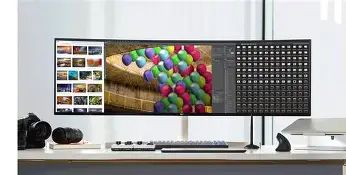
One small, immediate disappointment was the remote-ish feeling of the on-screen display (OSD) controls. They work, but navigating fine-grain settings is clunky compared with some newer models I’ve tried since. Also, the matte coating on the panel prevents reflections well, but it slightly softens perceived contrast and micro-contrast compared with glossy panels — something I noticed when comparing the same image across other displays.
Daily productivity — the real benefit
In my experience, the single biggest advantage of the 49Wl95C W is the sheer usable horizontal real estate. I can fit two IDE windows, a terminal, and a reference browser tab without feeling cramped. Spreadsheets that used to require constant horizontal scrolling are now comfortably visible. For meetings, I keep one half of the screen for the call window and the other half for notes and reference material, which eliminated the cognitive friction of switching contexts.
When working with split-screen layouts, I liked that the monitor’s native 5120×1440 (32:9) resolution meant each virtual "27-inch" zone felt like a proper monitor in its own right. Dragging windows between zones is fluid, and I stopped reaching for a second monitor for most tasks.
Creative work and color accuracy
I do a fair amount of photo editing and light color work. Straight away, I found the panel’s color to be pleasing out of the box for casual editing — skin tones looked natural, and gradients were smooth. I did run hardware calibration with a colorimeter because I wanted consistent results across devices. After calibration, I got accurate results for sRGB work, and the monitor held a steady white balance for most of my sessions.
That said, if you’re a pro who needs wide DCI-P3 coverage or deep HDR grading capability, this monitor is not a dedicated professional reference. The HDR performance is modest: highlights pop more than on standard SDR panels, but it doesn’t match the peak brightness and local dimming precision of modern high-end HDR monitors. For everyday photo editing and web content creation, it’s excellent; for final pass color grading targeted at HDR cinema, you’ll want a monitor built specifically for that workflow.
Entertainment and gaming
I’m not a competitive esports player, but I do game casually. The monitor’s refresh rate and response are fine for single-player and less latency-sensitive titles. Fast-paced shooters revealed that motion handling isn't on par with high-refresh VA/G-Sync monitors designed for gaming; I noticed a little ghosting and smeared dark scenes. For cinematic gaming and flight sims, though, the ultra-wide field of view is immersive and genuinely fun.
Something I appreciated was the way movies encoded for ultrawide or cinematic ratios fill the screen — it gives a very "wraparound" feel without bezels. If you prioritize gaming at high frame rates, though, expect some trade-offs: you’ll need a powerful GPU to drive 5120×1440 at high frame rates in modern titles.
Looking for the best Electronics deals on Amazon?
View Offers →Connectivity and ergonomics
In my setup, the monitor functioned well as a single-cable hub most days. I used the USB-C connection to carry video and power, and I had a couple of peripherals plugged into the monitor’s USB ports. The convenience of docking and undocking with a single cable is underappreciated — I noticed improved workflow switching when working with a laptop. Do verify your laptop’s power delivery expectations before relying on it as your only cable, because laptop charging behavior varies across brands.
Ergonomically, you should plan desk space ahead. The 49Wl95C W is large and takes up depth as well as width. I recommend either a wide desk or a good monitor arm so you can pull the screen closer or push it back depending on your work. Once positioned correctly, long sessions are comfortable; I didn’t experience neck strain because the curve helps maintain a consistent focal distance across the width.
Software, OSD, and real-world quirks
The monitor’s software and OSD are functional but not slick. Window management with the monitor’s bundled software is helpful for quick preset splits (two-up, three-up, four-up), but I still prefer third-party window managers on my OS of choice. On some days I found the USB hub would sleep when my laptop did, and occasionally devices didn’t re-enumerate immediately on wake — a small hassle that was resolved by unplugging and replugging once or twice.
Backlight uniformity was mostly good in my unit, though I did observe a faint amount of backlight bleed at extreme brightness settings when the room was fully dark. For normal office lighting this never bothered me, but if you edit black-heavy scenes in a dark room you might notice it.
Longevity and reliability
After months of daily use, the panel has held up well. I had no dead pixels and no panel color drift worth reporting. The stand’s mechanical parts remained solid until I replaced it with a VESA arm. If you plan to run this monitor 10+ hours a day, expect normal wear on the power button and any physical controls over years, but I’d rate the build as solid for home office and studio use.
Pros & Cons
- Pros
- Massive, usable horizontal workspace that effectively replaces two monitors
- Excellent for productivity — spreadsheets, coding, and multitasking feel natural
- Good out-of-the-box color for sRGB work and much better after calibration
- Single-cable docking convenience with USB-C (video + data + power)
- Sturdy build and comfortable curvature for extended sessions
- Cons
- HDR performance is limited compared with modern high-end HDR panels
- Not ideal for competitive gaming due to refresh/response limitations
- OSD and bundled software feel dated; occasional hub re-enumeration issues
- Physical size requires a wide desk or monitor arm — measure your space first
- Some users may prefer a glossy panel for the highest perceived contrast
Comparison: 49Wl95C W vs popular alternatives
| Monitor | Resolution | Aspect Ratio | Panel Type | Refresh Rate | USB-C PD | Best for |
|---|---|---|---|---|---|---|
| 49Wl95C W | 5120 × 1440 | 32:9 | IPS | 60Hz | Yes (laptop docking) | Productivity, content creation, cinematic media |
| Samsung Odyssey (typical 49") | 5120 × 1440 | 32:9 | VA (higher contrast) | 120Hz+ | Some models have USB-C | Gaming-first immersive experience |
| Dell UltraSharp 49 (example) | 5120 × 1440 | 32:9 | IPS | 60Hz | Yes | Business productivity, color-accurate workflows |
This table is a high-level comparison to help you see where the 49Wl95C W sits relative to other 49" ultrawides: it leans toward productivity and creative workflows rather than competitive gaming or highest-end HDR grading.
Buying guide: what to check before you buy in 2026
Here are practical things I learned from living with the monitor that I wish I’d known at purchase time. Treat this as a checklist if you’re evaluating one now.
1. Check your GPU and ports
Driving a 5120×1440 display requires either DisplayPort or a USB-C/Thunderbolt connection capable of the necessary bandwidth. I noticed reduced color depth or forced refresh limits if I used older docking hardware. If you rely on a laptop dock, verify that it supports the monitor’s native resolution and refresh rate with your laptop model.
2. Desk space and arm compatibility
Measure twice. The monitor’s foot and overall width can overwhelm small desks. If you plan to use a monitor arm, ensure it’s rated for the weight and the VESA pattern and that it can reach far enough away from the desk to give you a comfortable viewing distance.
Find top-rated Electronics products at great prices.
View Offers →3. Calibration and color workflow
If you do creative work where color fidelity matters, be prepared to invest in a basic colorimeter. Out of the box the colors are pleasant, but calibration made a noticeable difference for me and ensured consistency across devices.
4. Expect realistic HDR
HDR on wide monitors of this class tends to be more of an enhanced SDR look than true HDR cinema unless the panel has very high peak brightness and local dimming. If HDR mastering is core to your work, prioritize monitors marketed explicitly for HDR10/HLG with high sustained peak brightness and good local dimming.
5. Test the USB hub behavior
Try to confirm from reviews or a hands-on demo how the monitor’s USB hub behaves with sleep/wake cycles if you plan to keep peripherals plugged into the monitor. In my setup, occasional re-enumeration meant I had to unplug and replug a device once in a while — not a deal-breaker, but worth knowing.
6. Consider your software window management
Although the monitor provides hardware-level split presets, I retained a third-party window manager to precisely tile windows to my needs. If you rely on automatic window snapping, verify the OS tools or third-party utilities meet your workflow.
My final verdict
After months of daily use, here’s the bottom line from my seat: I think the 49Wl95C W is an excellent purchase for people who prioritize productivity, multitasking, and creative work in a single-screen setup. It replaced my dual-display clutter and made my workflows smoother. The space savings on my desk and the convenience of single-cable docking were real, tangible benefits that I continue to enjoy.
However, if your primary use is competitive gaming or professional HDR grading, the monitor isn't the absolute best fit — you would be trading off some gaming performance and HDR fidelity for the ultrawide workspace. Additionally, pay attention to your desk size and docking hardware compatibility before buying; those two practical details caused the most friction in my setup.
All in all, in 2026 I still recommend the 49Wl95C W to power users and creative professionals who want a single, wide canvas for multitasking and media work, provided they accept the known trade-offs. For me personally, it’s become the most useful tool on my desk and I continue to reach for it every day.