Biggest Sxfi Air Wireless Buying Mistakes (And How to Avoid Them)
The Sxfi Air Wireless promises an immersive, holographic listening experience through Creative’s Super X-Fi processing while offering the convenience of wireless connectivity. For many buyers, that combination sounds like a one-stop solution for gaming, movies, and everyday listening. Yet a number of common buying mistakes lead to disappointment — not because the product fails, but because expectations, compatibility, and use-case fit were misunderstood. This article walks through those pitfalls, gives a balanced analysis of the Sxfi Air Wireless, and provides practical guidance so readers can decide whether it’s the right purchase for their needs.
Introduction: what buyers really care about
When shopping for wireless headphones that advertise spatial audio or “holographic” sound, buyers typically care about:
- Soundstage and immersion for movies and games
- Low latency for competitive gaming
- Comfort for long sessions (fit, padding, clamp force)
- Microphone clarity for calls and teammates
- Battery life and charging convenience
- Cross-platform compatibility (PC, macOS, consoles, mobile)
- Software features such as personalization and EQ
Understanding how the Sxfi Air Wireless addresses (or does not address) each of these priorities prevents impulse buys and buyer’s remorse.
Detailed product analysis
The Sxfi Air Wireless centers on two headline features: Creative’s Super X-Fi spatial processing and a wireless connection that supports both low-latency dongle use and Bluetooth. Super X-Fi is a headphone-holography system that attempts to recreate the experience of listening to multi-speaker setups through headphones by applying head and ear–specific corrections derived from a personal profile. In practice, that can produce a convincing sense of outward soundstage for movies and some games.
On connectivity, the Sxfi Air Wireless usually offers a USB wireless transmitter for low-latency PC or compatible console connections and standard Bluetooth for mobile. This dual approach is attractive: use the dongle for gaming on a PC and Bluetooth for music on the commute. However, platform compatibility varies in the real world. Not all consoles accept arbitrary USB audio dongles in the same way, and Bluetooth codecs and latency depend on both the source device and the headphone’s supported codecs.
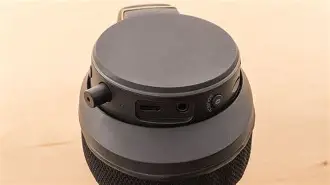
Build quality on many Sxfi Air Wireless units is positioned toward mainstream users: a mix of plastics with synthetic-leather padding, a foldable or partially adjustable headband, and on-ear or over-ear cups depending on the model. The included microphone and controls are typically designed for convenience (mute, volume, pairing) rather than studio-grade recording.
Software integration is important with any Super X-Fi product. The effectiveness of the holographic processing depends on creating a personalized profile (often via an app or photo-based setup) and applying the correct processing mode for the content. Buyers who skip profile setup or who rely on default settings will not see the full benefits.
Real-world use cases
Different buyers will use the Sxfi Air Wireless in different ways. Here are common scenarios and how the product typically performs:
- Movie-watching at home: Super X‑Fi tends to excel here, creating a broader soundstage that makes dialogue separation and surround cues feel more natural than plain stereo for many listeners.
- Casual gaming: For story-driven or single-player games where immersion matters more than split-second reaction time, the Sxfi Air Wireless delivers more presence and directionality than basic Bluetooth headphones.
- Competitive gaming / esports: Buyers focused on minimal latency and pinpoint positional audio may find the wireless dongle helpful, but the best competitive setups still favour wired headsets or dedicated low-latency systems; assumptions about “wireless = instant” can be dangerous here.
- Commuting and phone calls: Bluetooth convenience is strong, but microphone performance varies — users who make frequent calls should verify voice clarity in hands-on tests.
- Content creation and mixing: Spatial processing is not a substitute for accurate, flat monitoring. Those doing audio mixing should not expect Super X‑Fi to replace studio headphones.
Top buying mistakes and how to avoid them
Buyers make several recurring mistakes with spatial-audio headphones like the Sxfi Air Wireless. Each mistake is paired with a practical way to avoid it.
Mistake 1: Expecting magic — assuming spatial audio equals perfect surround
Why it happens: Marketing language like “holographic” or “3D audio” can lead buyers to expect the same experience as a true multi-speaker home theater.
How to avoid it: Treat Super X‑Fi as an enhancement for headphones, not a replacement for speakers. Expect improved spatial cues and a wider perceived soundstage, but not identical speaker placement or the physical sensation of bass from a subwoofer.
Mistake 2: Overlooking platform compatibility
Why it happens: Buyers assume the USB dongle will work with every device. In reality, vendor dongles and USB audio interfaces behave differently across PCs, Macs, and consoles.
How to avoid it: Check the official compatibility notes and community reports for the intended primary use (e.g., PS5, Nintendo Switch, Xbox). If the target platform has known restrictions, plan for alternatives (wired 3.5 mm, Bluetooth, or a different headset).
Discover deals on Audio & Headphones — updated daily.
Browse Now →Mistake 3: Using Bluetooth for competitive gaming
Why it happens: Convenience and cordless freedom are tempting during tense matches.
How to avoid it: For fast-paced multiplayer games where milliseconds matter, use the supplied low-latency wireless link or a wired connection. Reserve Bluetooth for non-competitive play, streaming, or mobile use.
Mistake 4: Skipping the Super X‑Fi profile setup
Why it happens: Some users skip app setup to start listening immediately.
How to avoid it: Spend the few minutes required to create a personalized profile. The difference between default processing and a tuned profile can be substantial for imaging and elevation cues.
Mistake 5: Ignoring microphone and voice quality
Why it happens: Many buyers emphasize audio playback while neglecting mic tests.
How to avoid it: If voice communication is important (streaming, conference calls, team play), test microphone samples in similar environments or read verified voice-quality reviews. Consider a separate desktop mic if clarity is mission-critical.
Mistake 6: Buying based on battery numbers alone
Why it happens: Ads often list long battery runtimes that don’t reflect real-world conditions (high volume, active processing, or low-latency mode can reduce life).
How to avoid it: Look for real-world battery reports and remember that settings, volume, and connection mode influence endurance. Plan for occasional charging and consider a wired fallback for long trips.
Pros & Cons
- Pros
- Immersive spatial processing that enhances movies and many games
- Dual connectivity options (wireless dongle for low-latency, Bluetooth for mobile)
- Personalization through Super X‑Fi profiles can improve perceived soundstage
- Convenient controls and generally comfortable mainstream fit
- Wired fallback preserves usability when battery is low or for low-latency needs
- Cons
- Spatial processing is not a substitute for accurate studio monitoring
- Compatibility caveats with consoles or mobile devices may exist
- Microphone quality often lags behind dedicated desktop mics
- Real-world battery life and latency depend heavily on use case
- Software-driven features require app support and occasional firmware updates
Comparison: where Sxfi Air Wireless sits relative to other headphone types
A simple comparison helps place the Sxfi Air Wireless among typical alternatives. This table compares key attributes buyers care about.
| Attribute | Sxfi Air Wireless | Standard Bluetooth Headphones | Dedicated Wired Gaming Headset |
|---|---|---|---|
| Spatial audio | Super X‑Fi processing provides enhanced soundstage and holographic cues | Mostly stereo; some models support virtual surround via software | Often accurate positional cues when designed for gaming; no holography |
| Latency | Low with USB wireless dongle; Bluetooth varies by codec and device | Higher latency unless using low-latency codecs and hardware | Lowest latency via wired connection |
| Portability | Good; Bluetooth for on-the-go, but dongle adds gear | Best for commuters and phones | Less portable, usually bulkier with cords |
| Microphone | Integrated mic satisfactory for casual calls | Varies; many lack high-quality mics | Usually superior for clear voice chat |
| Software & personalization | Strong emphasis on app-driven Super X‑Fi profiles and EQ | Varies by brand; some offer EQ apps | Often limited to basic EQ or firmware features |
Buying guide: what to check before purchasing
To avoid the common mistakes, follow this checklist before hitting buy:
1. Define the primary use case
Decide whether the headset will be used mainly for single-player immersion, competitive multiplayer, mobile music, or work-from-home calls. The Sxfi Air Wireless is strongest for immersive single-player experiences and mixed use — if competitive esports or studio mixing are priorities, consider specialized alternatives.
2. Check platform compatibility
Confirm whether the USB dongle is supported by the intended device. For consoles, verify whether the console accepts USB audio dongles or requires other adapters. For PCs and Macs, ensure drivers or native support exist for the desired features.
Discover deals on Audio & Headphones — updated daily.
View Offers →3. Evaluate latency needs
If latency is critical, test the dongle mode and wired mode. Use sample audio tests or watch videos that show lip-sync and directional cues. Remember that Bluetooth, even with modern codecs, can introduce latency that matters in competitive play.
4. Test Super X‑Fi personalization
If possible, try the personalization process — either in-store demo or via a trial. See how much difference a personalized profile makes for perceived directionality and elevation. Some listeners prefer the processed sound, others find it colored.
5. Assess comfort and fit
Comfort cannot be judged from specs alone. Try the headset, or check reviewers who have long-session tests. Consider clamping force (important for glasses wearers), earcup size, and padding breathability.
6. Review microphone samples
Listen to real voice recordings from reviewers to understand real-world voice quality and background noise handling. If voice is vital, plan to use a separate microphone instead of relying solely on the headset mic.
7. Investigate battery and charging behavior
Look for real-world reports about battery life under the intended usage pattern (dongle vs Bluetooth, volume levels, active processing). Confirm charging port type and whether quick-charge features are supported.
8. Look at software and update support
Active firmware and app support improve long-term value. Check the manufacturer’s track record on updates and whether the app receives periodic improvements.
9. Consider return policies and warranty
Because spatial audio preferences are subjective, a generous return policy makes it easier to test the product at home and decide if Super X‑Fi suits the listener. Verify warranty terms for defects and battery coverage.
Common questions buyers ask
Here are brief answers to common buyer questions:
- Is Super X‑Fi good for music? It can add a greater sense of space to certain recordings, especially live or cinematic tracks, but some listeners prefer unprocessed (flat) sound for critical listening.
- Will the dongle work with my console? It depends on the console and the dongle’s compatibility. Research the specific console model and firmware, or test before committing.
- Can it replace a home theater? No — it provides a convincing headphone-based illusion of a broad soundstage but cannot replicate the physical dynamics of multiple speakers and a subwoofer.
Conclusion
The Sxfi Air Wireless sits at an interesting intersection: it pairs Creative’s Super X‑Fi spatial processing with flexible wireless connectivity, making it an appealing choice for users who want a more immersive headphone experience without giving up mobile convenience. The most significant buying mistakes stem from mismatched expectations and skipped research: assuming spatial processing will perfectly mimic speakers, neglecting platform compatibility, or using Bluetooth where low latency matters most.
By defining the primary use case, verifying compatibility, testing personalization, and being realistic about microphone and battery trade-offs, buyers can make an informed decision that delivers the intended benefits. For listeners seeking cinematic immersion on the go or better headphone soundstage for single-player entertainment, the Sxfi Air Wireless can be an excellent match — provided the buyer approaches the purchase with practical expectations and the right test criteria.