A Professional's Take on the New Dslr Beginners
Introduction
In a market increasingly dominated by computational photography and ever-improving phone cameras, it might seem surprising that entry-level DSLR cameras—often marketed as “DSLR for beginners”—still attract first-time interchangeable-lens buyers. Yet there are practical reasons they remain relevant: predictable handling, long battery life, comfortable grips for extended shooting, responsive physical controls, and an upgrade path through lenses and accessories. For many learners, a DSLR’s directness is part of its appeal. It teaches exposure, focus, and composition without hiding everything behind menus or touch gestures.
This article takes a professional, editorial look at the current crop of DSLR beginner models as a product category—what they do well, where they struggle in 2026, and how to decide whether a beginner DSLR is the right starting point compared with mirrorless alternatives. It also highlights the real-world scenarios that matter to new buyers: family events, travel, portraits, student projects, creator content, casual sports, and the everyday challenge of getting consistently sharp, well-exposed images.
What “DSLR Beginners” Usually Means in 2026
When retailers and manufacturers label something as a beginner DSLR, it typically implies several design and pricing choices:
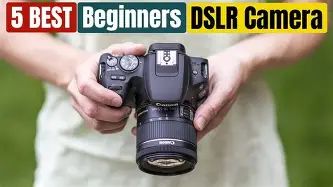
- APS-C sensor (most common) to balance cost, size, and image quality.
- Bundled kit lens (often an 18–55mm-style zoom) designed for affordability and versatility.
- Guided or simplified shooting modes that help new users understand exposure and common scenarios.
- Conservative autofocus and burst performance compared with enthusiast and professional bodies.
- Emphasis on ease-of-use, lighter weight, and approachable ergonomics.
- Older but stable lens ecosystems with lots of used options and third-party support.
Beginner DSLRs generally prioritize a friendly learning curve and consistent results over cutting-edge video features or high-end subject detection. That isn’t necessarily a drawback; it’s a reflection of who they’re made for. But it does mean that buyers need to be realistic about what they want to shoot—especially if video is a major priority.
Detailed Product Analysis: How Beginner DSLRs Perform in Real Use
1) Image Quality: The “Good Enough” Ceiling Is Higher Than Most Beginners Expect
From an image-quality standpoint, many beginner DSLRs deliver results that are far beyond what first-time users initially exploit. In normal light, an APS-C DSLR with a kit lens can produce clean files, pleasant color, and plenty of resolution for social posting, photobooks, and even moderate print sizes. The main differences a beginner notices are less about “megapixels” and more about lens quality, lighting, and technique.
In practical use cases:
- Family events indoors: image quality is often limited by lens aperture and lighting, not the sensor. A faster prime lens can matter more than a modest body upgrade.
- Travel and daylight landscapes: kit lenses can look impressively sharp when stopped down, and dynamic range is typically sufficient for balanced edits.
- Portraits: the ability to blur backgrounds depends heavily on lens choice; a simple 50mm prime (or equivalent) can transform the look.
2) Autofocus and Handling: Where DSLRs Still Feel “Photographer-First”
Beginner DSLR autofocus systems commonly rely on a dedicated phase-detection module for viewfinder shooting. This can feel fast and decisive for stills, especially in stable conditions. The experience of placing a focus point, half-pressing the shutter, and shooting is straightforward and tactile—an advantage for learners practicing timing and composition.
However, buyers should understand the split personality of many entry-level DSLRs:
- Through the viewfinder: autofocus is typically quicker and more confident for stills.
- In live view (rear screen): autofocus may be slower, may “hunt,” and may feel less modern than mirrorless cameras with on-sensor subject detection.
For real-world beginners, this matters in two common scenarios. First, when photographing children or pets indoors, many new users default to live view like they would on a phone—only to discover tracking isn’t as effortless. Second, for video, live-view autofocus behavior can determine whether footage looks smooth and professional or distracting and unstable.
3) Ergonomics and Learning: The Underappreciated Strength
Professionals often note that DSLRs—even entry-level ones—are comfortable to hold for long sessions. The grip, button spacing, and optical viewfinder can reduce fatigue and encourage deliberate shooting. For learners, the physicality reinforces fundamentals: shutter speed, aperture, ISO, exposure compensation, and focus modes become skills rather than hidden automations.
Buyers typically care about:
- How quickly they can change settings without diving into menus.
- Whether the camera feels balanced with the kit lens and with a future telephoto or prime.
- Whether it’s enjoyable to use, because enjoyment drives practice—and practice drives results.
4) Video: The Most Common Point of Disappointment
Many “DSLR beginner” buyers in 2026 are hybrid shooters by default: they want sharp photos and easy video for school projects, travel diaries, or creator content. This is where entry-level DSLRs can be the wrong tool—depending on expectations.
Find top-rated Electronics products at great prices.
Shop Amazon →Beginner DSLRs may deliver acceptable video in controlled conditions, but typical limitations include:
- Less reliable continuous autofocus compared to many modern mirrorless systems.
- Limited frame rate and resolution options depending on model generation.
- Basic audio features, sometimes lacking robust microphone support or clean monitoring options.
That said, for a beginner who primarily shoots stills and only occasionally captures short clips, a DSLR can still be a sensible choice—especially if the priority is learning photography rather than building a video workflow.
5) Lens Ecosystem and Cost of Ownership: Where the Value Often Hides
One of the strongest arguments for beginner DSLRs is the mature lens ecosystem. Buyers often care less about the body and more about what it enables: portraits with background separation, telephoto reach for sports, or wide-angle landscapes. DSLR mounts generally have:
- Affordable used lenses with predictable compatibility.
- Third-party options that keep prices competitive.
- Plentiful accessories (flashes, remotes, batteries) that are easy to find.
For a budget-conscious beginner, the ability to buy a solid used prime lens and a used flash can have more impact than purchasing the newest body. This is particularly relevant for indoor family photography, where lighting and lens speed make the biggest difference.
Pros & Cons of Beginner DSLRs
Pros
- Strong still-photo experience with responsive handling and clear shooting fundamentals.
- Excellent battery life compared with many mirrorless cameras, especially for long days out.
- Comfortable ergonomics for extended shooting sessions and learning.
- Huge lens and accessory ecosystem, including a deep used market.
- Optical viewfinder clarity in bright sunlight with no lag or screen washout.
- Cost-effective upgrades via lenses rather than replacing the camera body immediately.
Cons
- Live-view autofocus can feel dated compared with newer mirrorless subject tracking.
- Video features are often limited for aspiring content creators who want smooth continuous AF and modern codecs/options.
- Bulk and weight can be higher than comparable mirrorless setups, especially once lenses add up.
- Fewer “smart” assists like advanced face/eye tracking depending on the model generation.
- Upgrade path may shift if a buyer later wants a modern hybrid workflow that favors mirrorless bodies and lenses.
Comparison Table: Beginner DSLR vs Mirrorless Entry-Level vs Advanced Phone Camera
Not every beginner should buy a DSLR. The best choice depends on what the buyer wants to learn, how they plan to shoot, and how much they want to carry. The table below compares the typical experience across three common starting points.
| Category | Beginner DSLR | Entry-Level Mirrorless | Advanced Phone Camera |
|---|---|---|---|
| Best for | Learning still photography, comfortable handling, lens-based growth | Hybrid photo/video, modern AF, compact travel setups | Everyday convenience, social-first output, computational results |
| Autofocus (stills) | Strong via viewfinder; variable in live view | Typically strong with on-sensor AF and tracking | Very strong for faces; limited creative control |
| Autofocus (video) | Often the weak point; may hunt or feel less smooth | Often a key strength; better tracking in many cases | Very convenient; looks good but less flexible in post |
| Low light | Good with the right lens; kit lens may struggle indoors | Good with the right lens; many have strong IBIS options at higher tiers | Good-looking results via processing; less natural detail at times |
| Battery life | Usually excellent | Often moderate | Depends on phone usage; heavy video drains quickly |
| Learning value | High: teaches exposure and technique clearly | High: similar learning, plus modern AF/video tools | Moderate: great composition practice, limited manual depth |
| Total system cost | Often lowest for used lenses and bodies | Varies; can be higher depending on lens choices | High upfront phone cost, low accessory cost |
| Portability | Moderate to bulky | Often more compact | Best |
Buying Guide: How to Choose the Right Beginner DSLR Setup
For buyers who decide a beginner DSLR aligns with their goals, the next step is choosing a configuration that matches real-world use. Most disappointment comes from mismatched expectations: a buyer wants crisp indoor photos of fast-moving kids but uses a slow kit lens in poor light; or a buyer expects modern video tracking and discovers the camera is optimized for viewfinder stills.
1) Start With the Use Case, Not the Spec Sheet
Everyday family and indoor life
Buyers typically care about sharp faces, pleasing skin tones, and minimal blur indoors. A beginner DSLR body can handle this, but the lens choice and lighting strategy matter most. If indoor family photos are the main goal, it’s wise to plan for:
- A fast prime lens for low light and background blur (more impactful than extra megapixels).
- A simple bounce-capable flash for natural-looking indoor light.
- Comfortable autofocus controls so the user can reliably focus on eyes or faces.
Travel and street photography
Travelers care about portability, battery life, and versatility. A DSLR kit can work well here—especially for daylight shooting—but buyers should consider how often they’ll carry it. In practice, the best travel camera is the one that actually leaves the hotel.
Portraits and creative depth-of-field
Portrait buyers care about background separation and flattering perspective. Entry-level DSLRs can excel here with inexpensive primes. A kit lens can do portraits, but a dedicated portrait lens is often the turning point where beginners see why interchangeable lenses matter.
Sports and action
Beginner DSLRs can capture sports, but expectations should be realistic. Buyers care about autofocus tracking, burst rate, and lens reach. The camera body matters here, but the lens matters more: action photography becomes far easier with a telephoto lens that focuses quickly and offers enough reach for the field or court.
2) Understand the Kit Lens: Useful, but Not Magical
The typical beginner DSLR bundle includes a general-purpose zoom. It’s a practical starting point for learning focal lengths, framing, and exposure. But many buyers assume the camera will instantly outperform a phone in every scenario. In reality:
- In bright light: the kit lens can look excellent.
- In low light: the kit lens is often the limiting factor, forcing higher ISO or slower shutter speeds that introduce noise or blur.
- For background blur: a kit zoom can blur backgrounds at longer focal lengths and closer distances, but a fast prime makes it much easier.
3) Prioritize Handling and Controls
Beginner DSLRs differ in button layout, menu clarity, viewfinder comfort, and grip size. Buyers care about these details more than they expect—especially after the novelty wears off. A camera that feels intuitive will be used more often, and more usage means faster learning and better results. Important handling considerations include:
Looking for the best Electronics deals on Amazon?
Browse Now →- Dedicated controls for exposure compensation and ISO.
- A clear mode dial with manual and semi-auto modes (A/Av, S/Tv, P).
- A comfortable viewfinder experience, particularly for glasses wearers.
- Articulating screen needs if the buyer often shoots from high/low angles.
4) Don’t Overbuy Features You Won’t Use
A common beginner trap is paying extra for headline specs while ignoring the basics that improve real results. For most beginners, the practical hierarchy looks like this:
- First: a comfortable camera body the user enjoys carrying and operating.
- Second: a lens plan (kit lens plus one purposeful lens).
- Third: learning exposure, autofocus modes, and simple editing.
- Fourth: extra features (very high burst rates, niche metering modes, advanced connectivity).
5) Plan a Simple “Two-Lens Path”
Buyers often ask what to purchase after the kit lens. A professional approach is to build a small, intentional kit around how the camera will be used. A practical beginner DSLR roadmap is:
- Lens #1: the kit zoom for general learning and versatility.
- Lens #2: one targeted lens for the main passion (a fast prime for portraits/indoors, a telephoto for sports/wildlife, or a wide-angle for landscapes/architecture).
This approach prevents gear sprawl and keeps the learning curve manageable. It also maps directly to what beginners care about: “How do I get better results in the situations I actually shoot?”
6) Consider the Reality of Video Needs
If the buyer expects frequent video—vlogs, interviews, classroom content, or creator posts—then it’s worth evaluating whether a beginner DSLR is the right tool. Many entry-level DSLRs can produce attractive video, but usability and autofocus behavior vary widely by generation. Buyers who care about video typically also care about:
- Reliable continuous autofocus without distracting pulsing.
- Usable audio, including external mic support and manageable wind noise.
- Stabilization strategy (lens stabilization, technique, or external stabilization).
- Workflow speed for transferring and editing clips.
If video is central, a beginner should seriously compare mirrorless options in the same budget. If video is occasional and still photography is the focus, a DSLR remains a logical and often cost-effective learning platform.
7) Buying New vs Used: What Professionals Often Recommend
Because DSLR ecosystems are mature, used gear can be an excellent value. Many beginners care about affordability and fear that used gear is risky. In practice, a careful used purchase can unlock better lenses sooner, which improves results more than buying the newest body. Sensible used-buying priorities include:
- Buy the lens used from a reputable source if possible; lenses age well and matter most for image character.
- Check shutter count and physical condition on the body if information is available.
- Budget for a fresh battery if the camera is older.
- Test autofocus consistency and confirm card/battery doors and hot shoe are intact.
Editorial Verdict: Who Should Choose a Beginner DSLR Today?
A beginner DSLR is still a strong choice for a buyer who wants to learn photography deliberately, values excellent battery life, prefers optical viewfinder shooting, and wants access to a broad, affordable lens ecosystem—especially through used gear. It’s particularly sensible for stills-first shooters: parents who want better portraits and cleaner indoor images, students learning exposure and composition, and hobbyists who enjoy the tactile craft of photography.
On the other hand, if a buyer’s main goal is a modern hybrid workflow with frequent video, effortless subject tracking in live view, and a compact carry-everywhere setup, an entry-level mirrorless camera may align better with what they care about day to day. The key is not whether a beginner DSLR is “good” (it often is), but whether it is the most frictionless tool for the buyer’s intended use.
Conclusion
The “DSLR beginners” category remains relevant because it offers an approachable, photographer-centered way to grow. These cameras reward practice, provide a comfortable shooting experience, and open the door to lenses that meaningfully change what a beginner can create. For still photography—especially when paired with one purposeful additional lens—a beginner DSLR can produce images that feel like a genuine step up in control and intent.
For buyers who choose carefully based on real use cases rather than marketing promises, a beginner DSLR is not an outdated starting point; it is a practical learning tool with a mature ecosystem and a clear path from first steps to confident shooting.